
Kauna Guide
How Kauna Baskets Are Made in Manipur
Kauna baskets begin with a natural water reed and become useful household pieces through patient handwork. In Manipur, Kauna craft is connected to the local material and to artisans who understand how to dry, sort, shape, and finish the reed for practical use.
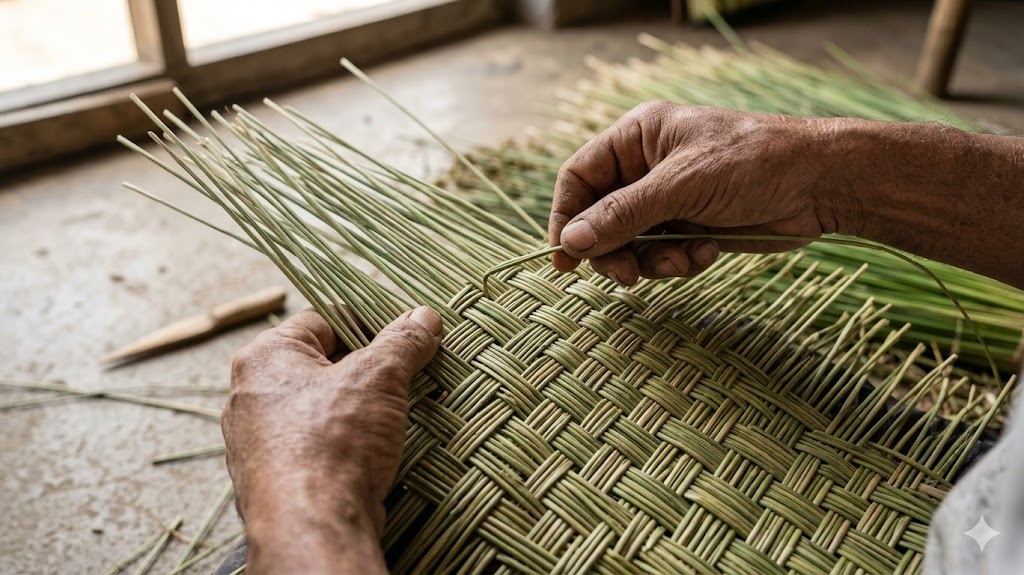
1. Harvesting the Kauna grass
The process starts with Kauna grass grown in wetland areas. The long reeds are harvested when they are suitable for craft use. Working with natural material means the maker begins by observing the reed rather than forcing every stem into one identical standard.
Bundles are gathered so they can be cleaned and prepared. The quality of the raw reed affects the feel of the finished basket, so sorting begins early in the process.
2. Cleaning, sorting, and drying
Fresh reeds need to dry before weaving. The material is cleaned and placed where air and sunlight can gradually reduce moisture. As it dries, the reed becomes firmer and develops its recognizable natural beige tone.
Artisans sort the dried material by length, thickness, and usability. This makes it easier to choose suitable reeds for the basket base, sides, rim, and finishing details.
3. Building the woven form
The basket takes shape through repeated rows of weaving. The artisan controls tension carefully: a loose weave will not hold structure, while an overly rigid weave can lose the light quality that makes Kauna useful.
The form may be shallow or deep, open or lidded, handled or handle-free. Each decision depends on the basket's intended use, whether it is meant for shelf storage, gifting, decor, or everyday organization.
4. Finishing the rim and checking the basket
The upper edge is finished to give the basket a clean boundary and help it hold shape. Handles, lids, or decorative details are added when the design calls for them. The maker checks the overall balance, woven surface, and usability before the piece is ready.
The finished basket will still show natural variation. Slight shifts in tone or line are signs of the reed and the hand-weaving process. They are part of what makes each Kauna basket feel individual.
Why the making process matters
Understanding the process helps shoppers recognize the value of a handmade Kauna basket. It is not only a container. It is a practical object shaped from local natural material through skilled work.
When used thoughtfully and kept dry, a Kauna basket can bring this craft story into daily life through storage, gifting, and home decor.
Frequently asked questions
How are Kauna baskets made in Manipur?
Kauna reeds are harvested, cleaned, dried, sorted, woven by hand, shaped, finished at the rim, and checked for practical use.
Why is Kauna grass dried before weaving?
Drying reduces moisture and helps the reed become firmer and more suitable for structured weaving.
Why do handmade Kauna baskets have variations?
Natural reeds vary in tone and width, and each basket is shaped by hand. Small variations are a normal part of the craft.
Keep exploring
Shop related Kauna pieces
These product pages are linked from our craft guides so shoppers can move from material research to the matching handmade pieces.
Get craft notes and restock help
If you are researching Kauna bags before buying, send us a note and we will help you choose the right shape, handle, and collection.